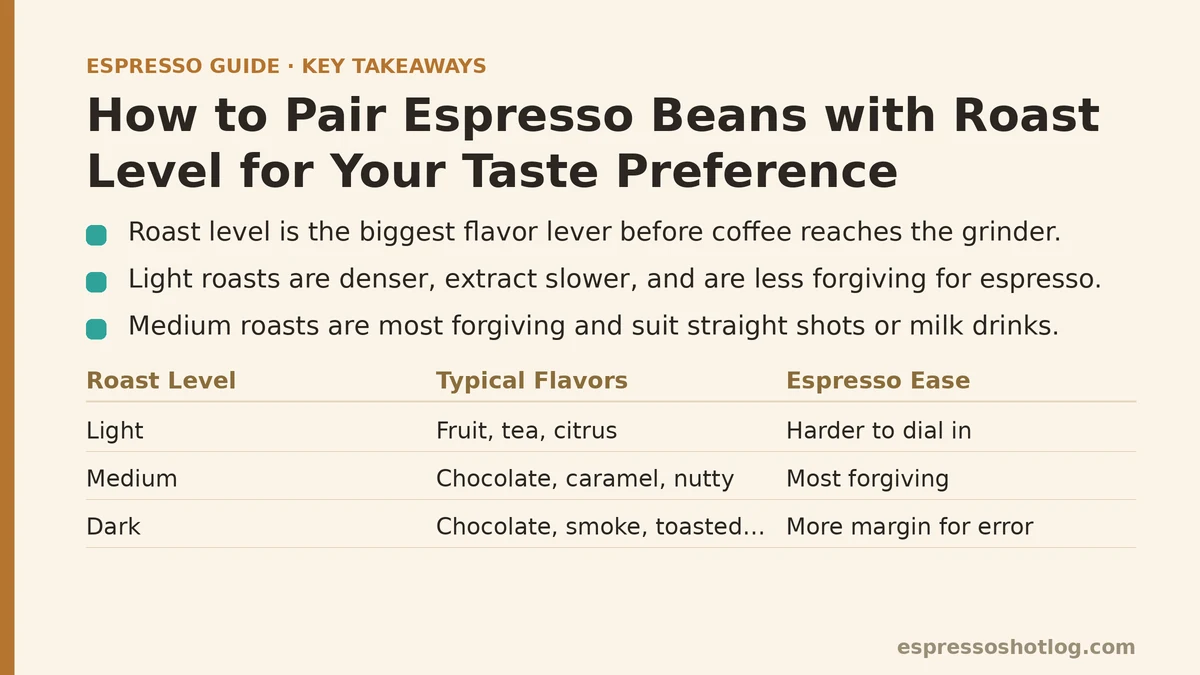
A light roast espresso tastes like fruit and tea and sometimes even citrus. A dark roast espresso tastes like chocolate, smoke, and toasted nuts. Same plant, same brewing method, wildly different cup — and the gap between them trips up more home baristas than grind size ever does.
Roast level is the single biggest lever you have over flavor before the coffee even reaches your grinder. Below are some of the most common questions people ask when trying to figure out which roast actually belongs in their cup.
What Does Roast Level Actually Change in the Coffee?
Roasting drives a series of chemical reactions inside the bean, and how far you push those reactions determines almost everything about how the final espresso tastes.
Light roasts are pulled off the roaster early, before sugars have caramelized very far and before the bean’s original oils have migrated to the surface. That preserves more of the coffee’s origin character — the specific fruit notes, florals, or acidity tied to where it was grown.
Dark roasts sit in the roaster considerably longer. Sugars caramelize heavily, oils rise to the surface (which is why dark beans often look shiny), and origin character gets replaced by roast character — the bittersweet, smoky, sometimes ashy flavors that come from the roasting process itself rather than the farm.
Medium roasts land between those two extremes, keeping some origin character while adding some roast-driven sweetness and body.
None of this is subtle once you taste roasts side by side. It’s the difference between a coffee that tastes like where it came from and a coffee that tastes like how it was treated afterward.
Which Roast Should I Choose If I Like Bright, Fruity Flavors?
Go light. Light roasts are where a bean’s acidity and origin-specific notes show up most clearly — berry, citrus, stone fruit, sometimes floral or tea-like qualities depending on where the coffee was grown.
There’s a tradeoff worth knowing about before you commit to a bag, though. Light roasts are harder to dial in for espresso specifically. They’re denser, they extract more slowly, and they’re less forgiving of an imprecise grind or an inconsistent tamp. A shot pulled slightly off from a light roast tends to taste sour or thin rather than simply “not great,” whereas a darker roast has more margin for error built in.
If bright, complex flavor is what you’re after and you’re willing to put in a bit more dialing-in time, a light roast rewards that effort in a way darker roasts never quite match.
Which Roast Should I Choose If I Want Chocolate, Caramel, or Nutty Notes?
Medium roast is usually your best target. This is where caramelized sugars start contributing real sweetness and body without erasing the bean’s underlying character completely. Think chocolate, caramel, toasted nut, maybe a light spice note — flavors most people associate with “classic” coffee taste.
Medium roasts also tend to be the most forgiving for espresso brewing. They extract predictably, tolerate small grind or timing variations without falling apart in the cup, and produce a balanced shot that works equally well straight or as the base for milk drinks. If you’re newer to espresso and don’t yet have strong opinions about roast character, medium is a sensible place to start building your palate.
Which Roast Should I Choose If I Want Something Bold and Intense?
Dark roast is the answer, with one caveat worth stating plainly: “bold” and “bitter” are closely related here, and dark roasts lean bitter almost by definition. If you enjoy that smoky, heavy, low-acidity profile — the flavor most people picture when they hear the word “espresso” — dark roast delivers it reliably.
Dark roasts are also the most forgiving roast level of all for espresso extraction. Their cell structure has broken down more during roasting, so they extract faster and tolerate a wider range of grind settings and timing without turning noticeably worse. That’s part of why so many commercial espresso blends default to dark — consistency across a busy shift matters more than showcasing subtle origin flavor.
The tradeoff is that dark roast largely trades away the bean’s specific origin character in exchange for that bold, roast-driven flavor. If you’re drinking dark roast, you’re mostly tasting the roasting process, not the farm.
Can Roast Level and Milk Drinks Change This Advice?
Yes, and this is worth separating from straight-shot preferences. Milk mutes and softens flavor considerably, so a roast that tastes perfectly balanced as a straight shot can taste flat or muted once it’s under a few ounces of steamed milk.
For lattes and cappuccinos, medium to medium-dark roasts generally hold up best — they have enough body and roasted sweetness to punch through milk without needing to be aggressively dark. Light roasts, with their delicate acidity, often get lost entirely under milk; that bright fruit note you loved in a straight shot can vanish almost completely once milk is added. Very dark roasts can work in milk drinks too, but they sometimes read as flat or one-dimensionally bitter rather than complex once milk mutes their sharper edges.
If you drink espresso mostly as lattes or cappuccinos, that alone is a good reason to lean medium-dark even if you’d otherwise gravitate toward something lighter for a straight shot.
What If I’m Not Sure What I Like Yet?
Start in the middle and move outward from there. A medium roast gives you a reasonable baseline — enough sweetness and body to taste pleasant even with imperfect technique, while still leaving some origin character intact to compare against.
From that starting point, pay attention to what pulls your attention when you drink other people’s coffee. If you keep noticing and enjoying acidity or fruitiness, move toward light roast next. If you keep gravitating toward the darkest, boldest option on a menu, move toward dark roast. Most people land somewhere specific within a few bags of experimenting, once they know what to pay attention to.
Does the Same Bean Taste Different at Every Roast Level?
It does, sometimes dramatically so. The same lot of coffee roasted three different ways can produce three noticeably different cups — bright and complex at light, balanced and sweet at medium, bold and smoky at dark. This is a useful thing to try at least once, because it isolates roast level as a variable on its own, separate from origin, processing method, or farm.
Some specialty roasters sell exactly this kind of sampler — the same bean at two or three roast levels — specifically so customers can taste the difference directly rather than comparing roast level across completely different beans, which muddies the comparison with origin differences too.
Quick Reference: Matching Roast to Preference
| If you like… | Choose | Keep in mind |
|---|---|---|
| Fruity, bright, acidic flavors | Light roast | Less forgiving to dial in; can get lost under milk |
| Balanced sweetness, chocolate or nutty notes | Medium roast | Most forgiving for beginners; versatile with milk |
| Bold, smoky, low-acidity intensity | Dark roast | Most tolerant of grind and timing variation; trades origin character for roast character |
| Lattes and cappuccinos specifically | Medium to medium-dark | Milk mutes delicate flavors, so lighter roasts often disappear |
Where do you usually land when you compare bags side by side — do you reach for the lighter option first, or does the darkest bag on the shelf always win out? Tell me what you’ve noticed in your own cup, and I can help you narrow down a roast level worth building your next few bags around. Related guides: Espresso Machine Buying Guide for Beginners: Your First Setup, Espresso Machine Maintenance Mistakes That Ruin Your Shots and How to Avoid Them, and Espresso Troubleshooting Flowchart: Diagnosing Shots by Taste and Time.